Standardized patient photos for Global Health
Tue Nov 10 2026
Dr. Christopher Runyan and his team from Wake Forest Medical Center are working with the neurosurgeon and maxillofacial surgeon at Marie Curie Children's Hospital in Bucharest, Romania, to build the hospital's capacity for complex craniofacial surgery. We are proud ImageAssist is part of their workflow, helping them document each child's care the same way at every stage, even when hospital Wi-Fi and cell service are not steady.
ImageAssist delivered smooth service in variable conditions, and the team had no problems moving or storing images.
They also trained the local team to keep capturing photos after the visit, so each child can be followed over time.
The work in Bucharest
This was Dr. Runyan's fourth visit to Marie Curie Children's Hospital. Many of the patients are already known to the team.
The team is working with the hospital's neurosurgeon and maxillofacial surgeon to build the hospital's capacity for complex craniofacial surgery. Most of the patients have syndromic craniofacial conditions. These conditions affect how the skull and face develop. Patients typically need several reconstructive surgeries.
Why standardized photos matter
Standardized photos are how a surgical team sees change. Same angles, same framing, same lighting, at every visit. This is very important in global health.
These patients are followed for years and need several reconstructive surgeries. Consistent photos let surgeons compare a patient from the first visit through each stage of care. Without that consistency, photos from different visits cannot be compared reliably.
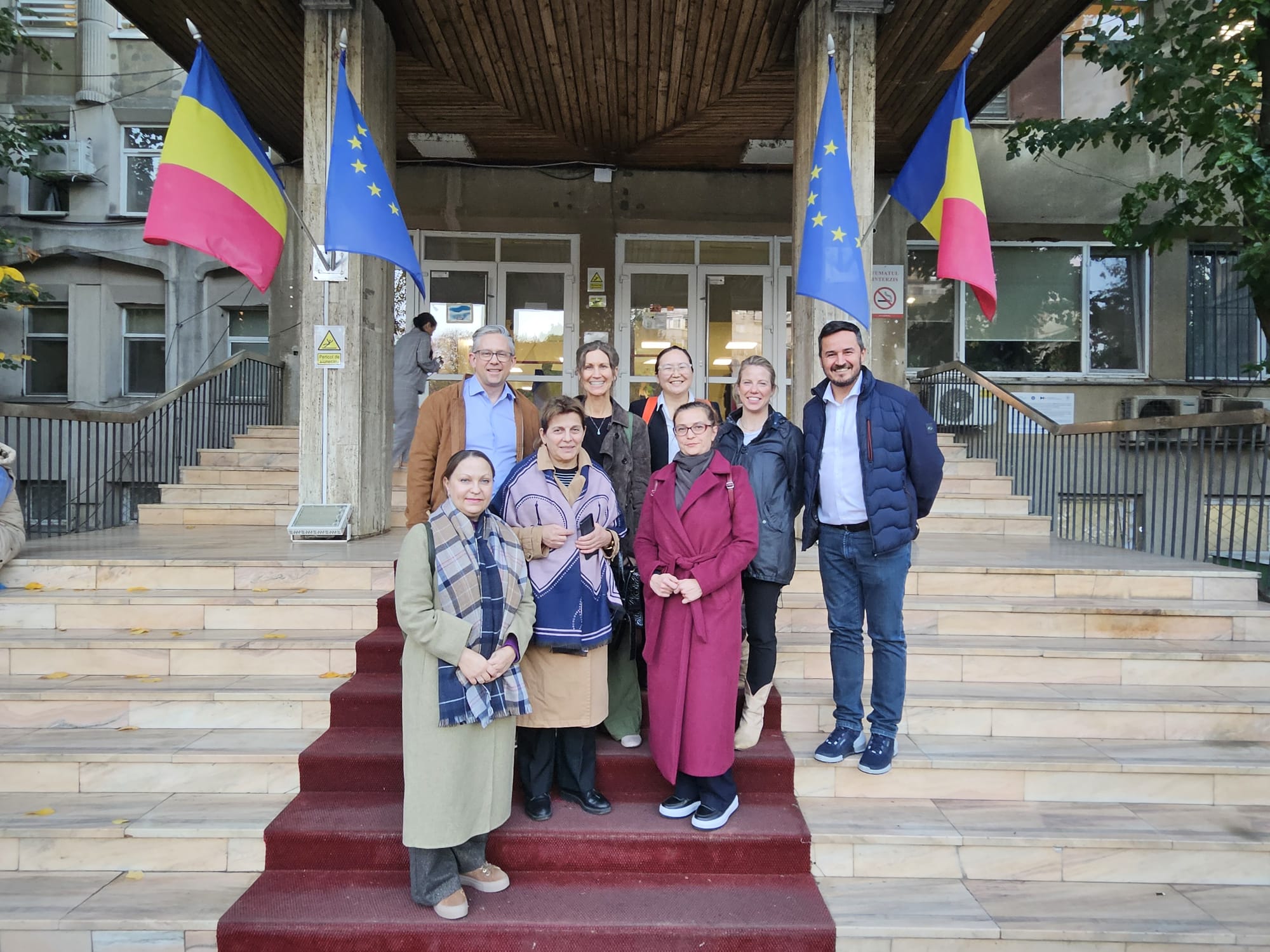
The team outside Marie Curie Children's Hospital in Bucharest, Romania.
In Dr. Runyan's words
The ImageAssist clinical photography software is seamless and reliable. We were able to acquire quality standardized photos on all of our patients, and had no issues with image transfer or storage. We trained the team there to continue using the ImageAssist app after our departure in order to obtain post-operative images for optimal standardization.
Built for variable conditions
Hospitals do not have steady connections. Wi-Fi strength changes from room to room, cell service drops, and some spaces are dead spots.
This is also the case for other global health projects in more remote settings.
ImageAssist's advanced technology is built for this. Service stays smooth, and interruptions do not disrupt the photo capture workflow.
The clinician captures every photo the same way, so each patient's record stays standardized wherever the care happens.
What's next
The team in Bucharest will keep using ImageAssist after the visiting surgeons leave. They will capture post-operative photos, so each patient's progress is recorded the same way as the first visit.
Hundreds of clinicians use the same workflow. It gives them standardized patient photos, whether they work in a Bucharest hospital or a busy clinic.